
Every provider claims to run the best personal trainer course in Edinburgh. Most of them can't all be right. Here's the checklist we'd hand a friend before they paid a deposit anywhere, including here.
- The exact accreditation checks that separate a real course from a weak one
- Why practical training days matter more than the exam itself
- How to spot a course that skips business training entirely
- What the price tag actually tells you, and what it doesn't
- A printable checklist to use while comparing providers
- What Actually Separates a Good Course From a Bad One
- Check the Accreditation First
- How Much Real Coaching Practice Is Included?
- Does It Teach You to Build a Business?
- What the Price Actually Tells You
- Red Flags That Should Make You Pause
- Is the Course Actually Based in Edinburgh?
- Reviews, Pass Rates, and What Happens If You Fail
- The Full Checklist
- Common Questions
What Actually Separates a Good Course From a Bad One
Every course promises a career. Very few explain what's actually in the box.
A good course gives you a recognised qualification, real coaching practice, and a plan for finding clients. A bad course gives you a certificate and leaves you to work out the rest alone.
The difference rarely shows up on the sales page. It shows up six months after you qualify, when you're either fully booked or still waiting for your first client.
Two people can pass the exact same exam and end up in completely different places. One walks into a gym with a client acquisition plan and a mentor on speed dial. The other walks out with a certificate and no idea what to do next.
That gap isn't about talent. It's about what the course actually taught, beyond the syllabus required to pass.
Check the Accreditation First
Before you look at price, check two things: CIMSPA endorsement and Ofqual regulation. These aren't marketing badges. They're what gym employers and insurers actually check.
CIMSPA is the UK fitness sector's chartered professional body. Ofqual regulation confirms your qualification is formally recognised nationally, not just by the provider that sold it to you.
Don't take a logo on faith. Search the course name directly on CIMSPA's own website before you enrol anywhere.
This step takes five minutes and saves you from a much bigger problem later. Some gyms will not hire a trainer without both accreditations in place.
It also affects your insurance. Public liability cover for personal trainers usually requires a recognised qualification behind it. Skip this check and you could end up qualified on paper but unable to legally work.
- Course is listed as CIMSPA endorsed on CIMSPA's own website, not just the provider's homepage
- Qualification carries genuine Ofqual regulation
- Provider can name their awarding body without hesitation
How Much Real Coaching Practice Is Included?
Passing a written exam proves you know the theory. It doesn't prove you can coach a nervous client through their first squat.
Look for courses with multiple in-person practical days, not a single assessment afternoon. You want to practise on real people, under guidance, before you ever charge someone for a session.
Ask specifically how many practical days are included, and what happens during them. A tutor watching you cue a deadlift is worth more than another module of reading.
Some providers count a single online video call as "practical training". That's not the same as standing next to a real client, correcting their form in real time.
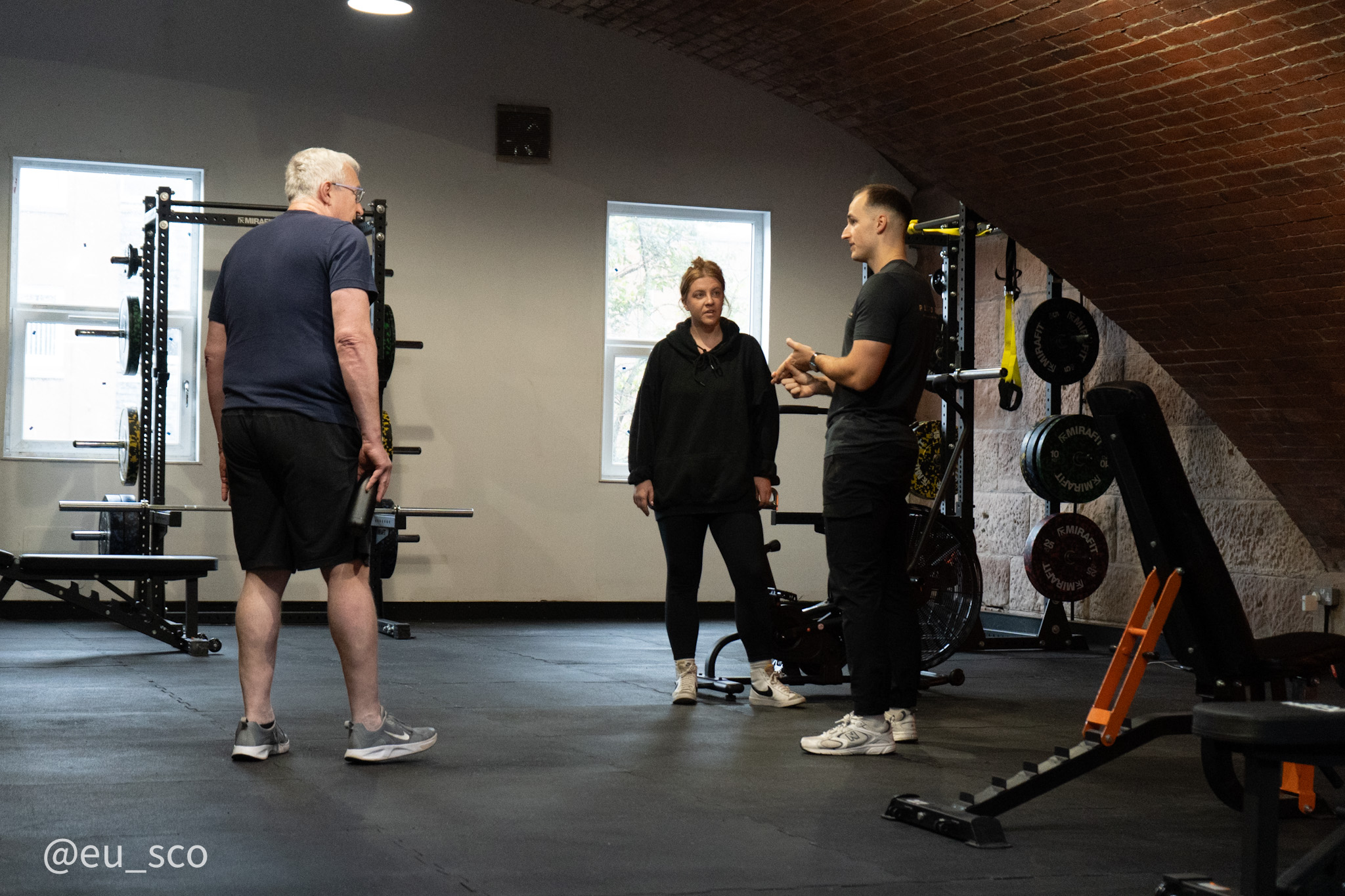
At The FCC's Level 3 PT Course, practical days run at Platform Health and Fitness in Edinburgh, a working gym, not a training suite built for show.
Want to see what real practical training looks like?
Take the free suitability quiz to find out which course route fits your schedule.
Take the Free Suitability QuizDoes It Teach You to Build a Business?
A qualification makes you legally able to train clients. It doesn't teach you how to find them.
Ask any provider directly: does the course cover pricing, client acquisition, and retention? Many don't. That gap is exactly why some graduates qualify and then stall for months.
Think about it from an employer's side too. A gym manager doesn't just want a qualified trainer. They want someone who can build a client base fast, because that's what keeps the gym floor busy.
Every FCC course includes a career blueprint module covering pricing strategy and building a client base, not just anatomy and programming. Our guide to building a client base covers exactly what that looks like in practice.
See the Standard We Train To
This is the same gym floor where our students complete their practical assessments. Watch what real coaching training actually looks like before you compare it to anywhere else.
What the Price Actually Tells You
Personal trainer courses in Edinburgh range from around £1,000 for online-only study to £3,000 for in-person, fast-track routes.
Price alone tells you almost nothing about quality. A cheap course that skips practical assessment can cost you more later, through retraining or a slower start.
Compare what's included for the money, not just the number on the page. Our full cost breakdown walks through exactly what drives the price difference between providers.
Most reputable providers now offer 0% finance, spreading the cost over 12 to 36 months. Our guide to payment plans covers exactly how that works and what to check before you sign up.
THE FITNESS COACH CHRONICLE LIMITED is an Introducer Appointed Representative of Social Money Limited t/a Payl8r who is authorised by the FCA under Ref. Number 675283. Credit is subject to creditworthiness and affordability assessments. Missed payments may affect your credit file, future borrowing and incur fees. Representative Example: £440.00 over 12 months at 2.50% fixed per month. Rep APR 65.5%. Monthly: £47.67. Total repayable: £572.04. 0% interest rate applies only where the loan is repaid in full within 30 days.
Red Flags That Should Make You Pause
Some warning signs show up before you even speak to a tutor. Learn to spot them early.
A countdown timer pushing you to "enrol in the next 2 hours" is a sales tactic, not a real deadline. Genuine course providers don't need artificial urgency to convince you.
Watch for vague answers about refunds. A provider confident in their course will have a clear, written policy for what happens if you're not satisfied early on.
Be wary of providers who can't name their own tutors or show you who's actually teaching. A course is only as good as the person running your practical day.
Finally, check how long the provider has actually operated in Edinburgh specifically. National franchises sometimes fly a tutor in for a single weekend, rather than running a genuine local presence.
Is the Course Actually Based in Edinburgh?
"Edinburgh" in a course name doesn't always mean Edinburgh in practice. Some providers run online theory with practical days held hours away, or only a handful of times a year.
Ask where practical sessions actually take place, and how often they run. A course tied to a single working gym in the city gives you consistency. One that flies in occasionally doesn't.
It matters for another reason too. Tutors based permanently in Edinburgh know which gyms are hiring, which chains value which qualifications, and how the local market actually works.
The FCC's practical days run at Platform Health and Fitness in Leith, the same gym our tutors coach clients in every week. You're training in a live business, not a rented room for the weekend.
Reviews, Pass Rates, and What Happens If You Fail
Star ratings are easy to collect. Ask harder questions instead. What's the actual pass rate? What happens if you fail a practical assessment first time?
A provider confident in their teaching will answer both questions clearly. One that dodges the question is telling you something too.
Read a handful of reviews carefully, not just the star count. Look for mentions of specific tutors, specific outcomes, and how long ago the client actually qualified.
Generic five-star reviews with no detail are worth less than three detailed reviews explaining exactly what a graduate learned and how it changed their career.
The FCC publishes a 100% pass rate because our tutors work with you until you're ready, not just until the exam date arrives. If a resit is needed, it's built into the process, not billed as an extra.
Ready to compare us against that checklist?
See the full course structure and what's included before you decide.
Enrol on the Level 3 PT CourseThe Full Checklist
Print this, or keep it open in a tab while you compare providers. A course worth your money should tick every box below.
- CIMSPA endorsed, verified on CIMSPA's own site
- Ofqual regulated qualification
- Multiple real, in-person practical training days
- Client acquisition and pricing strategy included in the course
- Tutors who are active, working coaches, not just lecturers
- A published pass rate the provider is happy to share
- 0% finance or a clear, honest payment plan
- A clear answer for what happens if you fail an assessment
THE FITNESS COACH CHRONICLE LIMITED is an Introducer Appointed Representative of Social Money Limited t/a Payl8r who is authorised by the FCA under Ref. Number 675283. Credit is subject to creditworthiness and affordability assessments. Missed payments may affect your credit file, future borrowing and incur fees. Representative Example: £440.00 over 12 months at 2.50% fixed per month. Rep APR 65.5%. Monthly: £47.67. Total repayable: £572.04. 0% interest rate applies only where the loan is repaid in full within 30 days.
If a provider ticks all eight, you're looking at a real course. If they dodge two or three, keep comparing before you commit.
Take this list with you to an open evening, a phone call, or a live chat window. Watch how quickly and specifically each provider answers. Hesitation on a simple question is data too.
You're not being difficult by asking. You're about to hand over hundreds or thousands of pounds and months of your time. A provider worth choosing will welcome the scrutiny, not avoid it.
Hear It From the Gym Floor
Beyond the checklist, it helps to see the coaching culture behind a course. This gives you a feel for the day to day at Platform.
Common Questions
-
What is the best personal trainer course in Edinburgh?
The best course for you is the one that's CIMSPA endorsed, Ofqual regulated, includes real in-person practical days, and teaches client acquisition alongside anatomy and programming. Several Edinburgh providers meet the accreditation bar. Fewer teach the business side.
-
How do I know if a personal trainer course is CIMSPA endorsed?
Check CIMSPA's own website directory, not just the logo on the provider's homepage. Search the course name directly on cimspa.co.uk to confirm current endorsement. Our CIMSPA vs REPs guide explains exactly what this endorsement checks for.
-
Should I choose the cheapest personal trainer course in Edinburgh?
Not automatically. A cheap course that skips practical assessment or business training often costs more in the end, through retraining or a slow start finding clients. Compare what's included, not just the price tag.
-
How many practical training days should a good PT course include?
Look for multiple in-person practical days with real client scenarios, not a single assessment afternoon. Coaching a live client under guidance is a different skill from passing a written exam.
-
Does it matter if a course teaches business skills, not just training skills?
Yes. A qualification gets you legally allowed to train clients. A client acquisition plan is what gets you paying clients. Courses that skip this leave graduates qualified but unsure how to actually start earning.
-
What questions should I ask a PT course provider before enrolling?
Ask for their CIMSPA endorsement reference, their pass rate, how many practical days are included, whether business training is part of the course, and what happens if you fail an assessment first time. See our free suitability quiz to find your best-fit route.