
Most people who want to become a personal trainer already know the basics: get qualified, get insured, get clients. The part they struggle with is making it real. This guide gives you five concrete steps, in order, with nothing skipped and no vague advice about "following your passion."
- Five ordered steps from where you are now to your first paying client
- A realistic week-by-week timeline for the fast-track and flexible routes
- What to do the day you qualify, before you even update your Instagram
- Why most new Edinburgh PTs wait too long to start looking for clients
- The one thing that will fill your diary faster than any marketing strategy
Step 1: Make the Decision and Set a Real Deadline
Most people spend 6 to 18 months "thinking about" a PT career before they do anything about it. They bookmark courses, watch YouTube videos, and tell people they are "considering it." That period is not preparation. It is delay.
The decision to become a PT is not complicated. Either you want to do it or you do not. If you do, set a deadline right now. Not "sometime this year." A specific date. "I will be enrolled by Friday." That single change separates the people who qualify from the people who are still thinking about it in two years.
What You Actually Need Before You Start
You do not need a fitness background. You do not need to be in peak physical shape. You do not need to know what CIMSPA stands for yet. Here is what you actually need to start:
- A genuine interest in helping people move and feel better
- The ability to commit 8 to 20 hours per week to studying for the duration of the course
- A budget of £1,000 to £3,000 depending on your chosen route, or a monthly payment plan in place
- A clear idea of when you want to be working, so you can choose the right route
That is the full list. Everything else comes from the course and from experience on the floor.
Why Edinburgh Is a Good Market to Enter Right Now
Edinburgh has over 150 gyms, health clubs, boutique studios, and leisure centres. The city's fitness culture is strong and growing, particularly in the post-pandemic period. Demand for qualified, career-focused PTs consistently outpaces the supply of people with the right credentials and the right attitude.
The city also has an above-average corporate population and a large university community. Both groups represent strong PT markets. If you qualify in Edinburgh, you are entering one of Scotland's best cities to build a fitness career.
Step 2: Choose Your Course and Enrol This Week
There are three things every Edinburgh PT course must have before you part with any money. First, CIMSPA endorsement. Second, Ofqual regulation. Third, practical assessment days at a real gym in or near Edinburgh. If any of those three are missing, move on.
Once you have verified those three things, the choice comes down to your timeline and your current life situation.
Fast-track route: Qualify in 8 to 10 weeks. Study theory online in concentrated blocks, complete practical assessment days at the Edinburgh venue. Best if you want to be earning as soon as possible.
Flexible online route: Qualify in 12 to 24 weeks, studying around existing work or family commitments. Theory is self-paced. Practical days are bookable when you are ready. Best if you need to keep earning while you study.
College route: Qualify in 6 to 12 months at a lower upfront cost. Fixed classroom days. Best for school leavers or those with no financial pressure to qualify quickly. Be aware of the time cost versus the money saved.
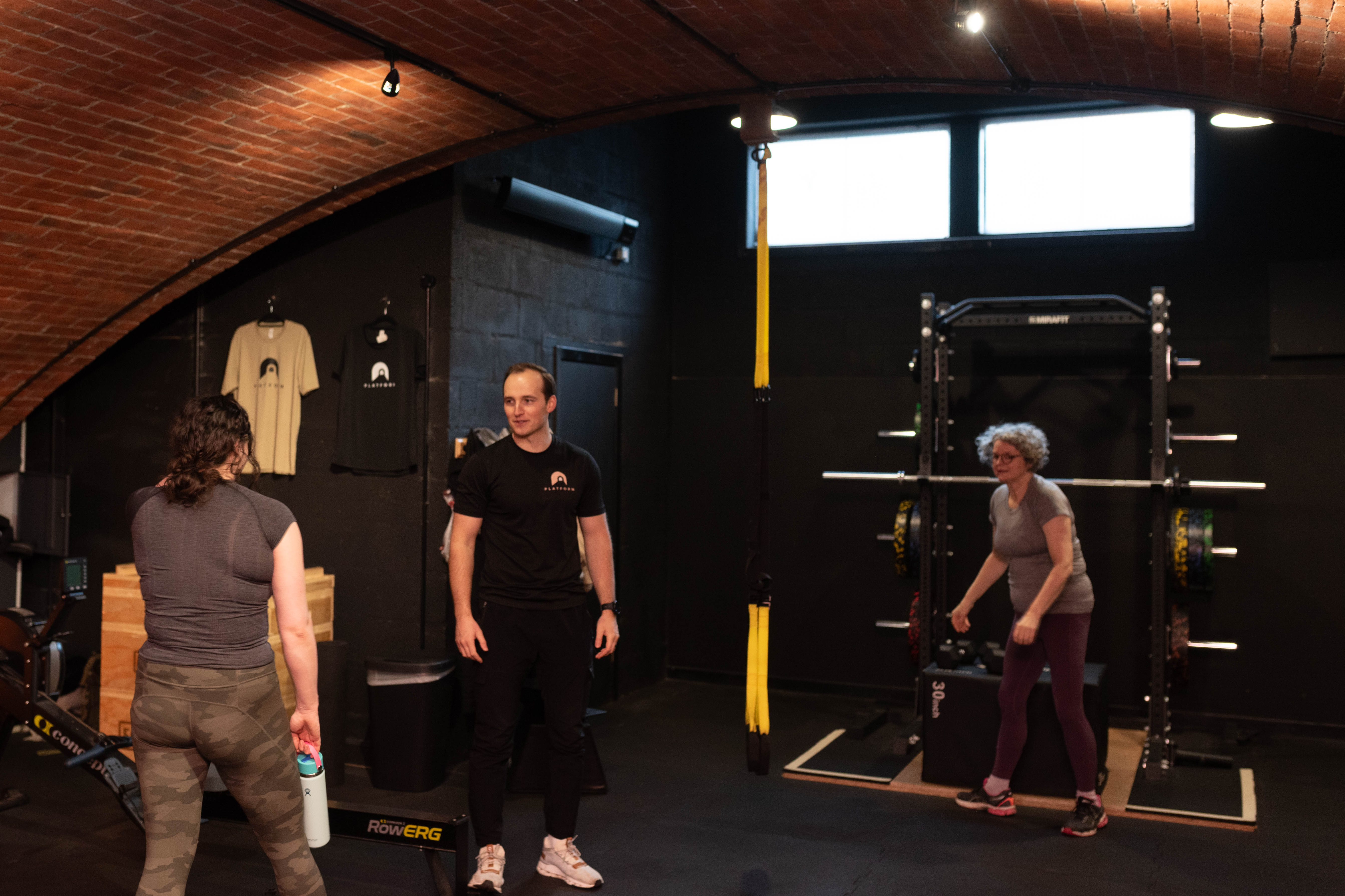
The FCC Level 3 PT Course covers both routes: flexible online and fast-track blended. Both carry full CIMSPA endorsement and Ofqual regulation. Practical days are held at Platform Health and Fitness in Edinburgh.
Do not spend more than a few days making this decision. Pick the route that fits your life right now and enrol. The best course is the one you start, not the one you spend three months researching.
Ready to enrol? Start with the free suitability quiz.
The FCC's 60-second quiz looks at your schedule, budget, and goals and tells you exactly which course fits your situation. No obligation, no sales call.
Take the Free Suitability QuizStep 3: Get Through the Course the Right Way
The qualification is not hard. But it does require consistent effort. Most people who fail or stall do so for one of two reasons: they let the theory modules pile up, or they underestimate the practical assessments.
How to Handle the Theory Modules
Treat the online modules like a job. Set aside specific time each week and protect it. Two hours on Tuesday evening and two hours on Saturday morning is a better strategy than "I'll do it when I have time." The latter never gets done.
Anatomy and physiology trips up more students than anything else. Do not memorise. Understand. Ask your tutor why a muscle works the way it does, not just what it is called. The practical assessment will ask you to apply knowledge, not recite it.
What Practical Assessments Actually Test
The practical days at Platform Health and Fitness test four things: your ability to screen a client safely, your technique coaching, your programme design thinking, and your professional conduct. Assessors are looking for someone they would trust to coach their own clients.
The standard is achievable. Treat every practical day as a real session with a real client, not as a test you are trying to pass. That mindset produces better results than exam nerves every time.
Start Thinking About Your Niche Before You Finish
Most people wait until after they qualify to think about who they want to work with. Do not wait. Use the course period to notice where your interest is strongest. Is it strength and conditioning? Post-natal fitness? Older adults? Corporate professionals? Your niche does not need to be fixed on day one, but having a clear direction the week you qualify means you start marketing immediately instead of spending another month figuring it out.
See What Training at Platform Health and Fitness Looks Like
This video shows the actual environment where FCC practical days are delivered. The facility, the equipment, and the coaching standard you will be assessed against.
Step 4: Get Legal, Insured, and Registered on Day One
The day you pass your final assessment, do three things before anything else. This is not optional. You cannot legally charge clients for personal training until all three are in place.
- Get public liability insurance. Cover starts at around £100 per year through providers like Insure4Sport or Balens. Some gym employment contracts will not activate until you can prove cover. Sort this the same day you qualify.
- Register with CIMSPA as a practitioner. Your CIMSPA practitioner profile is what Edinburgh gym managers check before offering you a role or floor access. Registration costs around £70 to £100 per year. Without it, your certificate is significantly less useful.
- Set up a professional email address. It costs nothing and it matters. "Jamie.Henderson@gmail.com" is fine. "speedogym2009@hotmail.com" is not. First impressions in fitness are physical and visual. Your email is the first thing a gym manager sees.
Should You Start Gym-Employed or Self-Employed?
For most new Edinburgh PTs, starting gym-employed is the right move. You get a floor full of potential clients, a steady income while you build your base, and experienced PTs around you to learn from. The trade-off is lower per-session earnings than self-employment.
The typical path looks like this: 6 to 12 months gym-employed, build to 15 to 20 regular clients, then transition to self-employment and set your own rates. That sequence reduces financial risk and builds the confidence you need to price your own sessions properly.
Some graduates go self-employed immediately. That works if you have a strong existing network, financial reserves to cover a slow start, and the discipline to market yourself consistently from week one. If any of those three are missing, the gym-employed route is safer.
Step 5: Find Your First Clients Before You Feel Ready
This is where most new PTs stall. They qualify, set up an Instagram account, post a few workout videos, and then wait. Weeks pass. The enquiries do not come. Confidence drops. They start wondering if they made the right decision.
Do not wait. The day you get your certificate, start telling people. Your first clients will come from your existing network, not from strangers online.
The 3 Actions That Get Your First Client Fastest
- Tell everyone you know, in person. Not a post. An actual conversation. "I've just qualified as a PT. I'm looking for 3 people who want to start training in the next two weeks. Know anyone?" That sentence alone has filled many a new PT's first week of sessions.
- Offer a free or deeply discounted first session. This is not undervaluing yourself. It is removing the barrier to commitment for someone who does not know you yet. One free session that converts to a paying client is worth far more than any Instagram reel.
- Ask every client for one referral. Not a review. A referral. "If you know anyone who'd benefit from this, I'd love an introduction." One client who loves what you do is a marketing channel. Use them.
Edinburgh-Specific Places to Find Your First Clients
Edinburgh has a network of community fitness events that new PTs rarely think to use. The parkrun events at Cramond, Portobello, and Holyrood regularly attract hundreds of runners who are already invested in their fitness. Show up, be part of the community, and be someone people want to ask for advice.
Corporate Edinburgh is another overlooked market. Financial services firms, law firms, and tech companies in the city centre employ thousands of desk-based professionals who want to move more but are time-poor. A PT who can offer early morning or lunchtime sessions near offices in EH1 or EH2 has a ready-made niche with above-average willingness to pay.
Edinburgh's university community is also worth noting. Staff and postgraduate students are often overlooked in favour of undergraduates, but they have more reliable incomes and longer study or work commitments that make them better long-term clients.
When Should You Start Marketing on Social Media?
Start after you have your first three paying clients. Not before. Social media will not get you your first client. Your network will. Once you have real results, real client testimonials, and a sense of your niche, social content becomes a useful tool. Before that, it is procrastination dressed as productivity.
The FCC team has watched hundreds of new Edinburgh PTs qualify and start their careers. The ones who fill their diaries fastest are not the most qualified or the best marketers. They are the ones who start asking before they feel ready.
You are one decision away from step one.
Enrol on the FCC Level 3 PT Course and be working as a qualified Edinburgh PT within 10 weeks. CIMSPA-endorsed, Ofqual-regulated, practical days in Edinburgh.
Enrol on the Level 3 PT CourseWhat Happens After Your First Client?
You learn faster than any course can teach you. Real clients with real goals, real injuries, and real life pressures will develop your coaching instincts in ways that no textbook can replicate. Every session in your first year is a lesson.
Your job after the first client is simple: do excellent work, ask for a referral, and keep showing up. The PTs who build strong Edinburgh businesses within two to three years are not exceptional coaches from day one. They are consistent ones.
As your client base grows, start thinking about your continuing professional development. CIMSPA requires 20 CPD hours per year to maintain practitioner registration. Use those hours wisely. Specialise in an area that your clients keep asking about. Charge more for the specialisation. Repeat.
If you want to understand the full qualification pathway in detail, or if you are still comparing study routes, the FCC course comparison guide walks through every option side by side. Both are worth reading before you enrol.
Frequently Asked Questions
-
Do I need prior experience to become a personal trainer in Edinburgh?
No. You do not need a gym background, a sports science degree, or prior coaching experience to start. The Level 2 and Level 3 qualifications are designed to take you from scratch. What you need is a genuine interest in helping people and the commitment to complete the course.
-
What is the first step to becoming a personal trainer in Edinburgh?
The first practical step is choosing a CIMSPA-endorsed Level 3 PT course and enrolling. Before that, the real first step is deciding your timeline and study route, whether you want to qualify in 8 to 10 weeks on a fast-track course or over 12 to 24 weeks studying flexibly around existing commitments.
-
How do I get my first personal training client in Edinburgh?
Your first clients almost always come from people you already know. Tell your network you are qualifying and offer a free or discounted first session. Ask for a review and one referral. One client who trusts you and refers others is worth more than any amount of social media content in your first three months.
-
Can I become a personal trainer in Edinburgh while working full-time?
Yes. The FCC's online and fast-track courses are designed for people with existing jobs. Theory modules are self-paced so you study when it suits you. Practical assessment days are scheduled at Platform Health and Fitness in Edinburgh and can be planned around your working week.
-
How long does it take to go from zero to working as a PT in Edinburgh?
On a fast-track blended route, you can be qualified and working within 10 to 12 weeks of starting. On a standard flexible online route, expect 4 to 6 months from enrolment to your first paying session. The gap between qualifying and earning depends almost entirely on how quickly you start looking for clients.